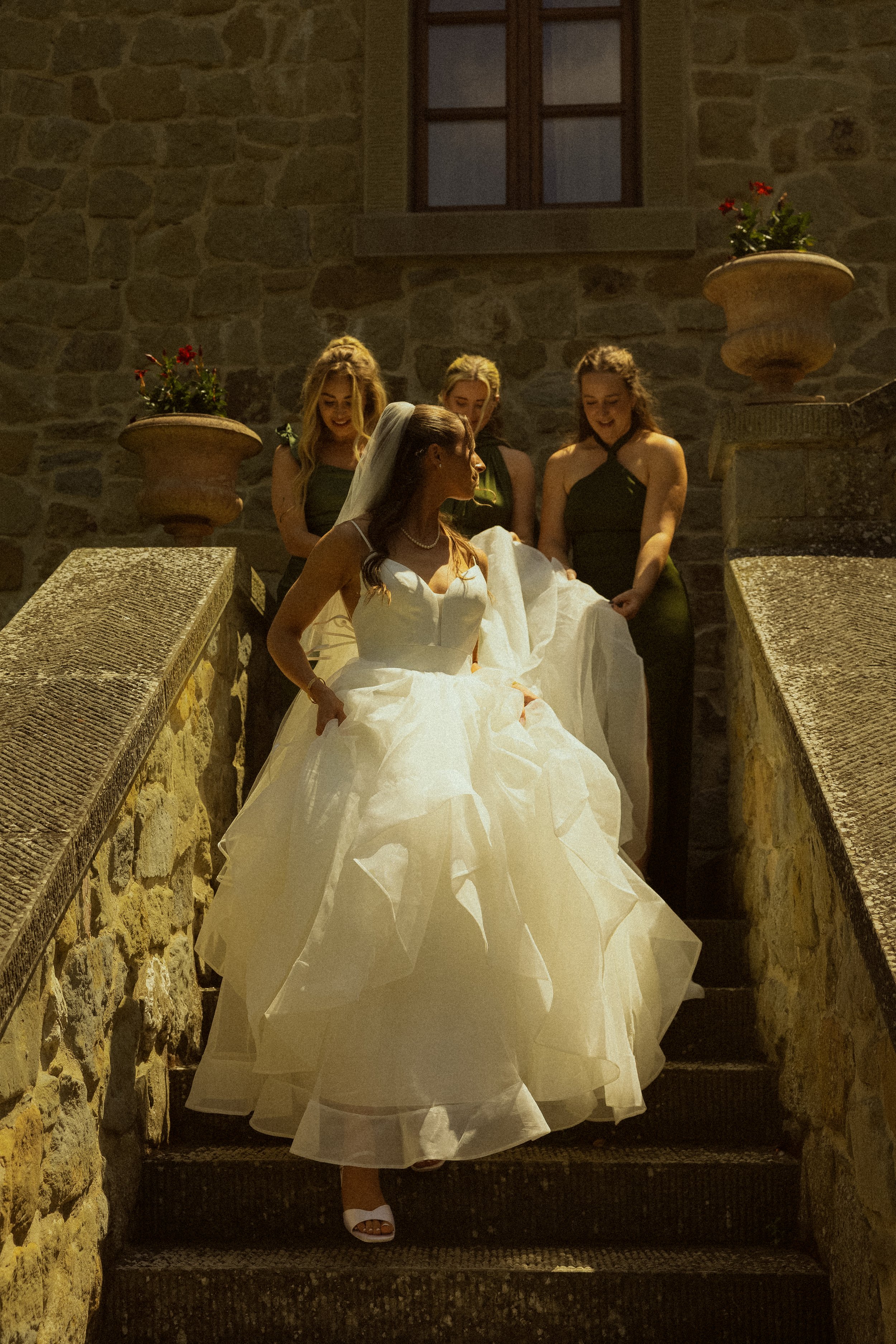
Everything Nobody Tells You About the Wedding Dress
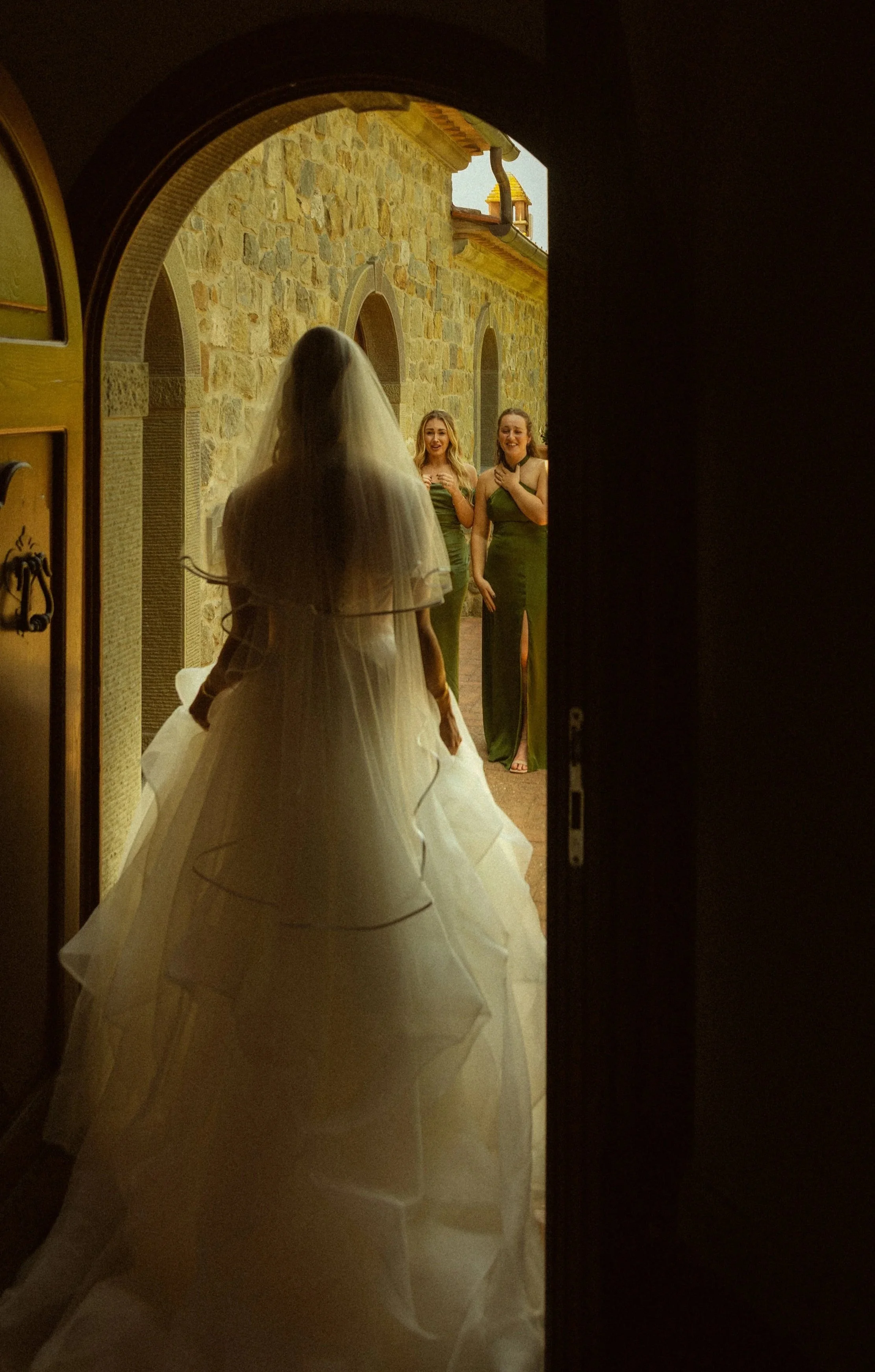
From the First Viewing to the Preservation Box
What Saying Yes to the Dress Actually Involves
The wedding dress: it has its own TV show, is one of the first things people who couldn’t be at the wedding ask about, and gets its own reveal. In summary…it gets more attention than almost any other part of wedding planning. People ask about it at every engagement party, every family dinner, every casual conversation about the wedding.
And yet, just like how a bride doesn’t share any details or hints on the design she’s chosen, nobody seems to really talk or warn the bride about what the dress journey actually involves.
Not the viewings you pay for. Not the tailoring appointments that run into hundreds of pounds. Not the logistics of getting it to the venue, or the specialist dry cleaning bill that appears after the confetti has settled.
I've been through every stage of this, as a bridesmaid, wedding planner, and very recently, as a bride who lived it herself. Read on for everything I wish someone had told me, and my experiences through the stages of saying yes to the dress.
One: The Viewing
The advice you always hear is "keep an open mind." It sounds cliché, but it is what I keep telling my friends and brides to be. I almost fell victim to love at first dress myself.
You walk in to the room with whoever you brought with you - mum, sister, bridesmaid, or maybe just a solo trip. For me it was my mum to begin with. You see rails of dresses in all materials, sizes and silhouettes, and expectant eyes looking at you eager to see what you pick out. Every one in the store waiting to see if you’ll be a sparkly ballgown or a minimalist and chic A-line type bride. I didn’t know where to go, what to say or what I could touch. I felt 5 years old and desperately wanting my mum to dress me again. Thankfully the lovely lady working realised it was my first dress fitting and fetched me one of each silhouette, even the ones we knew wouldn’t suit me, just in case. I am tall, wide shouldered, no curves. We had expected a long sleeved minimalist A line dress would be most me. But I felt most at home in strapless lace. And eventually, after my fourth dress shop visit, said yes to a ruffled princess dress. So I've said it before and I'll say it again - keep an open mind.
It’s an odd sensation trying the dress on. Never before had I worn something so expensive and I felt unworthy of stepping into something so precious and so important. I’m standing there in my white knickers, boobs out on show as the dress lady enters to zip or button me up. Waiting behind the curtain to reveal myself to my mum. I’m excited but also not wanting to give too much away - to show I love or don’t love the dress because I want their reactions first based on the dress and not me. You draw back their curtain, trying to interpret the faces, do they love it? is that a frown? are they frowning at the dress or at me being a bride, or just at the massive clips holding the dress together at the back? You walk up to the podium, trying not to trip over on the precious and expensive dress and look at yourself in the mirror that says “Team Bride” on or near it.
It all felt…normal. I thought there would be tears - “my baby’s all grown up!” from my mum, “I’ve found my husband!” or “what if i spill my dinner on it!” from me. Laughter, joy, clinks of champagne or “This is the one!!!” like in the movies. But there wasn’t. It was me. In a white dress. Planning for the big day. And just as quickly as I stood on the podium, I walked back into the changing room, got unzipped and put the next one on. I’m nothing if not efficient.
I whizzed through the different silhouettes. Found ones that took me by surprise, relieved at the quick nos, honed in on my favourite shapes and designs. And then I found it. I found the dress. On my first appointment! How lucky am I! It was a gorgeous strapless lace number with a corset that looked straight out of a storybook with a gorgeous long veil to match. I felt like a woodland fairy. “Job done” we said. And went home for dinner, ready to cross it off my to do list.
But it felt too quick. Dress shopping along with menu tasting is meant to be one of the most fun parts about wedding planning. So I booked another appointment at a different shop in a different city just to make sure. That’s when the trouble started. I found more dresses I liked, each one more beautiful than the last. And repeated the same process at the next shop and then the next. When I look back at the original dress I almost said yes to, I still love it, it is still beautiful, but I can’t imagine having my wedding without the dress I finally did choose. You need to sleep on it, you need to try more dresses, you need to go in different periods of your cycle, maybe by yourself, keep taking photos and comparing. Not just the front. The back, the profile, the way the skirt moves. You will think you'll remember how each one felt. You won't. The photos become invaluable when you're lying awake at 2am trying to choose. And in the end, you will find the dress that you fall for.
One thing a lot of brides don't realise: many bridal boutiques charge a per-visit fee. This varies by shop, but it can be anywhere from £20 to £75 per appointment, but some will deduct it from the cost if you purchase with them. Check before you book and factor it into your budget.
Also: be thoughtful about who you bring. More opinions aren't always better. Bring the people whose taste you trust and who will be honest with you. A large group can make an already emotional decision feel overwhelming. It's your dress, so make sure you're the loudest voice in the room. And good luck!
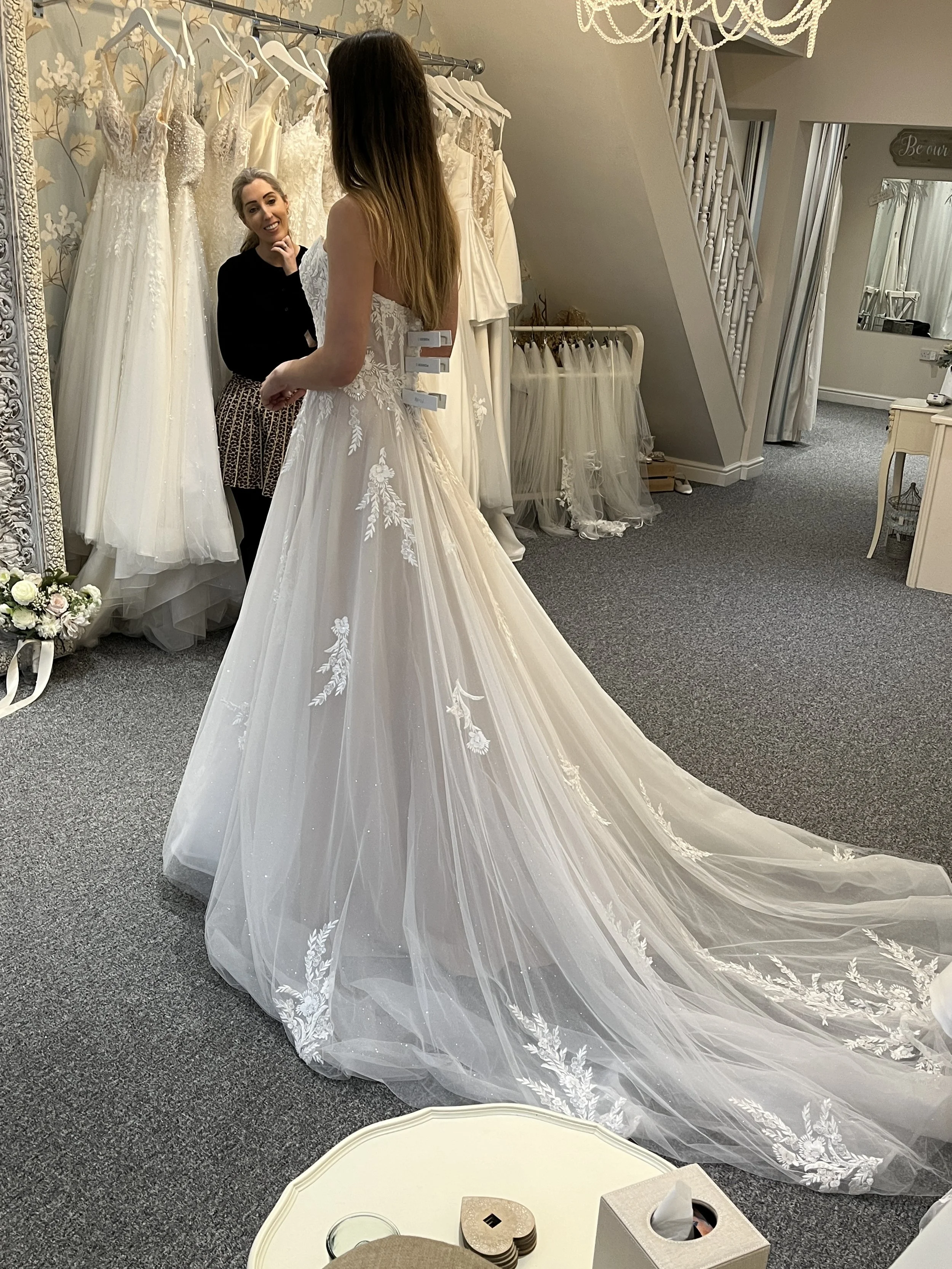
Sarah’s Wedding Boutique in Cheshire. The fourth shop I went to! Sarah was the best, she was patient, calm and considerate. She let me take my time, switch between dresses, and helped me find my style. It is an important decision to make! You want to be somewhere that appreciates that.
Two: The Tailoring
Once you've said yes to the dress, the next step is finding a tailor.
First, ask the boutique whether they work with a tailor. If they do, there's a real advantage: the boutique and tailor can coordinate directly when the dress arrives, which saves you time and means the tailor already knows the construction of your dress. If the boutique doesn't have a recommendation, or if their tailor isn't local to you, find one close to home. You will likely have three to four appointments, so proximity matters. You don’t want to be taking half a day off work every month like I did.
For each appointment, remember to bring the shoes you will be wearing on the day (essential for knowing what the length of the dress needs to be), and if you can bring your veil or any other accessories. It was during this time I realised the veil I had bought was wrong for the dress - the veil was too white next to my ivory dress, and too short. I had to order a new one two weeks before the wedding (not advised) and this one went straight on Vinted (still for sale, spread the word).
During this phase the tailor can:
Adjust the length and hem
Snatch in the waist for a closer fit
Tighten or add straps
Add a bustle (to bustle the train up for the reception or first dance and save people standing on it on the dance floor!)
Sew in bra cups or structured support (or advise you on Boombas)
Add sleeves or additional fabric or details
Sew in your something blue e.g. a little bow or ribbon, hidden inside the dress, just for you
Budget £300–600 for tailoring. I know that sounds significant on top of the cost of the dress itself. But please don't skip it, or try to minimise it to save money. Tailoring is what transforms a beautiful dress into your dress. It's the difference between wearing something gorgeous and wearing something that was made for you. It is always worth it.
Three: Collecting the Dress
When you go to collect the dress, after all the appointments, after the waiting, take your time. Trying it on is essential. Don’t just put it on and stand like a mannequin - walk, twirl, do a little dance. Check every detail: the fit, the hem, the bustle, the alterations you requested. Do the straps fall down when you lift your arms? Do the buttons pop if you breathe out? Do you trip on the hem if you walk too fast? Do you understand how to attach the bustle? Make sure you are completely happy with it before you leave.
Carrying it to the car is a nerve-racking thing - up until now it has been someone else’s responsibility. Now it is up to you to protect it from stains, hide it from your fiancé and get it where it needs to be. I found carrying it out of the store so difficult. It is a BIG bag! Like carrying a body. I tried holding it up by the hanger, but it was too long and trailed on the floor. I tried carrying it over both arms, but that was heavy and I couldn’t reach the keys. Dragging it behind me obviously wasn’t an option. It was a pilates, strength and logistics class rolled into one. But we both made it!
Then: store it safely. Keep it in its dress bag to protect the fabric from dust and light. Put it somewhere out of the way of prying eyes if you're keeping it at home before the wedding. And try your best not to keep taking it out for another look as the less it's handled, the better condition it arrives in on the day.
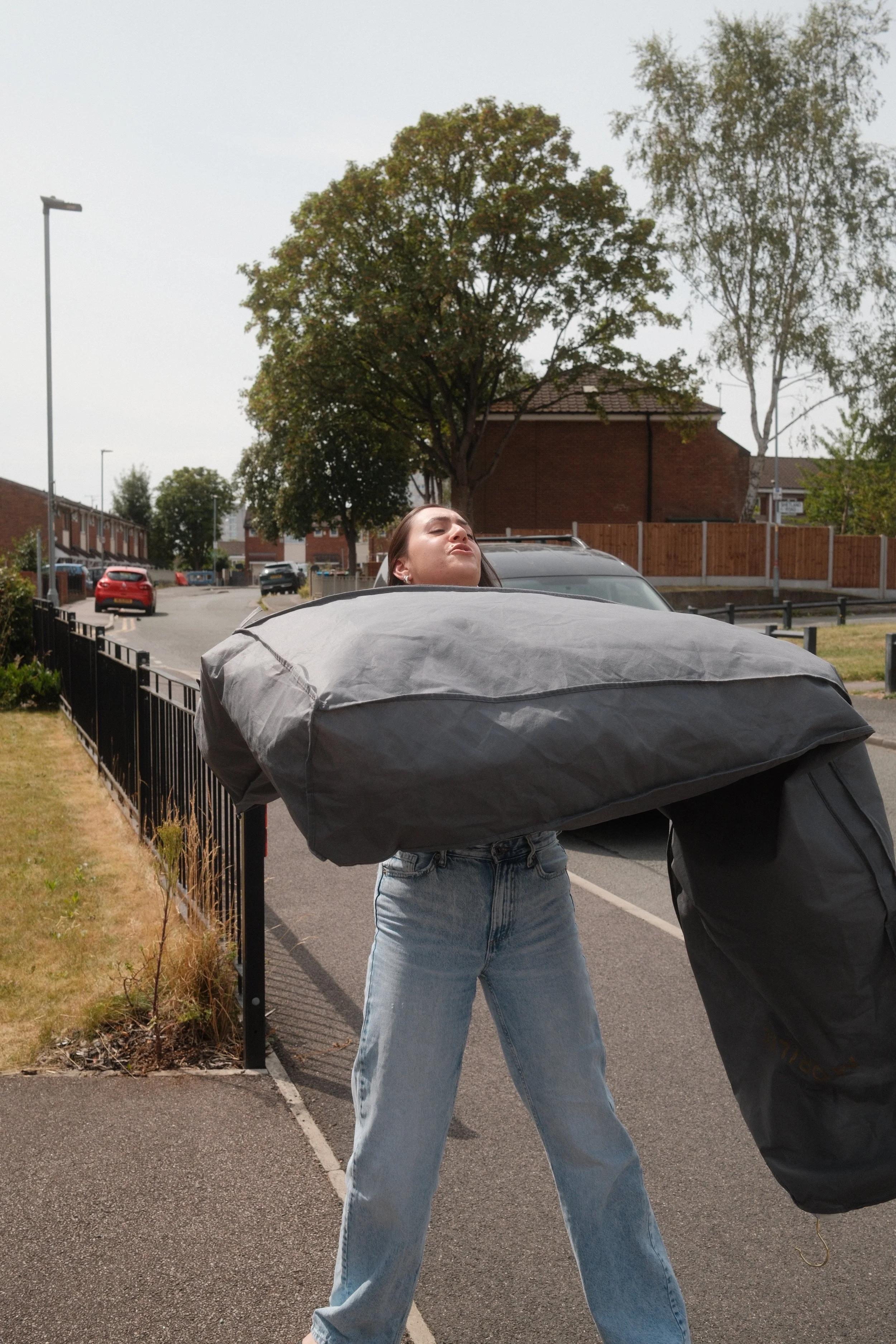
How we all feel when we first try to carry our dress.
Four: Getting It There
If you're flying: keep the dress with you. Always. Do not check it in. The risk of it being lost, delayed, or damaged in the hold is not worth the convenience. Don't let it out of your sight. This is where The Final Draft package comes in - I'll help you coordinate this as part of the final week checklist.
If you're driving to the venue: try to lay the dress flat across the back seat rather than hanging it, which can cause the fabric to stress around the hanger. If you do hang it, make sure it's supported.
In both cases: hang the dress up as soon as you arrive at your destination and let the creases fall out naturally. This alone will deal with a lot of the travel wrinkles.
And then steam it. A handheld steamer is one of the best purchases you can make in the weeks before your wedding. Either pack one yourself and delegate the steaming to someone you trust completely, or speak to your venue in advance about whether they can help. Don't leave this as a last-minute thing. Make a plan.

Make sure your photographer has your dress, shoes, veil and other accessories the morning of the wedding for some detail shots which you won’t regret!
Five: The Day Of
Pack an emergency kit. This should include: a small sewing kit with a needle and white/ivory thread, stain remover wipes, chalk (for grease marks: dab it on, leave it a moment, brush off), and spare buttons if your dress has them. Ask your seamstress to give you any spare fabric or buttons when you collect the dress (most will do this automatically).
Think about what you're wearing underneath, comfort matters more than you think over a long day. Pack deodorant that won't stain. Pack a change of knickers, especially at destination or summer weddings, to stay feeling fresh. Consider bringing a change of comfortable shoes for later in the evening so you can dance without the risk of blisters. Small things make a big difference when you're on your feet from 8am to past midnight.
Things can and do go wrong. A button can come loose. A hem can catch. A seam can pull under the pressure of a very exciting day. This is not bad luck. It is not a sign. It is just fabric under real-world conditions. Being prepared means that if something happens, someone fixes it in two minutes and you carry on.
When I put my dress on we were running a bit behind time and I was so excited to do my first look with my bridesmaids. I was also hot and bothered! I zipped it up, my mum did up my buttons, and I sat down to do my shoes. As I bent over to do my shoe buckle I felt and heard a “pop, pop, pop”. It was the hook and eye, and then several buttons and threads being ripped from my dress. I snapped up, horror in my eyes. My mum, photographer, and make-up artist stared at me with mouths on the floor. They didn’t realise what had happened, but were just reacting to the horror on my face, scared of the bridezilla moment that might follow. All I could do was laugh. “I must have had too much pizza last night! The buttons just burst!”. What else can you do but laugh it off? After months of planning and organising I just knew something would work out and that I wouldn’t walk down the aisle with my dress hanging around my ankles like a toddler walking out of the bathroom. Luckily one of the photographers came to the rescue. “Sewing kit?” she asked. Luckily I had made welcome gift bags in all the guest rooms, and had included travel sewing kits. During the time when I was meant to be taking my bridal shots, she sewed me into the dress. We knew the veil would shield any dodgy patchwork. And it was a great opportunity to face time some family members who couldn’t be there on the day, and show them my dress, at least from the front! Moral of the story? Be prepared and be calm, and surround yourself with people who can sew!
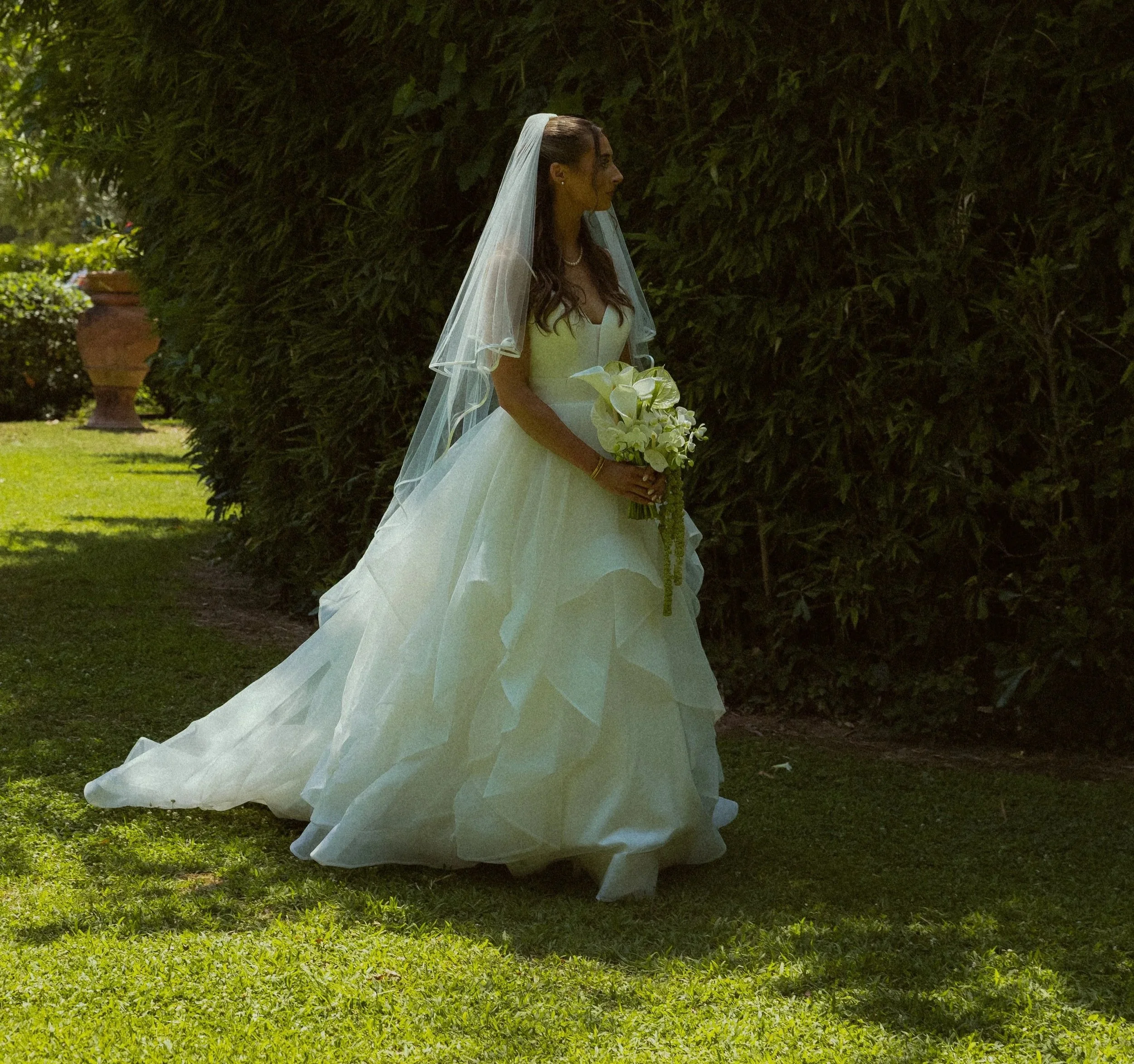
You can’t tell we had been having a wardrobe malfunction only 10 minutes before
Six: After the Wedding
The dress has had its moment. Now look after it properly.
Get it cleaned as soon as you can, ideally within the first few weeks after the wedding. Specialist wedding dress dry cleaning and preservation costs around £200–350, depending on the style of the dress, the length of the train, and what it's been through. This is a cost that catches a lot of people off guard, so budget for it in advance.
The sooner you clean it, the better chance you have of removing stains, including the ones you didn't notice. Grass, food, wine, champagne, outdoor dust, and the general residue of a very emotional day all accumulate. Some stains that look minor immediately can set permanently over time and become much harder to treat later.
At the end of my wedding we all ended up in the pool. It made for iconic photos, a memorable moment and a much needed opportunity to cool off. But that chlorine can’t have done my dress any good. I also had a whole jungle of insects that had crept into the layers of netting I had in my princess skirt throughout the day. None of this I could have cleaned myself.
When you hand it over for cleaning, ask for a preservation box and proper archival packaging. If the dress is going into storage, which it most likely is, it deserves to be packaged in a way that protects it from dust, moisture, and light. A preservation box typically includes acid-free tissue and sealed packaging that keeps the fabric in good condition for years.
Even if nobody ever wears it again. It was the dress. Look after it.
A Final Note
The wedding dress journey is longer, more involved, and more expensive than most people expect. From the first viewing to the preservation box, there are decisions, costs, and logistics at every stage that nobody really prepares you for.
I hope this helps you go into it with a clearer picture, so you can focus on the bit that actually matters: finding the dress that makes you feel completely, utterly like yourself.
If you have questions about any stage of this, or about wedding planning more broadly, my door (and my DMs) are always open.
By Georgia Ellen - bygeorgiaellen.com
Looking for support with your wedding planning? From a one-off Getting Started session to full on-the-day coordination, find out how I can help at bygeorgiaellen.com or drop me a message.